
The Short Answer
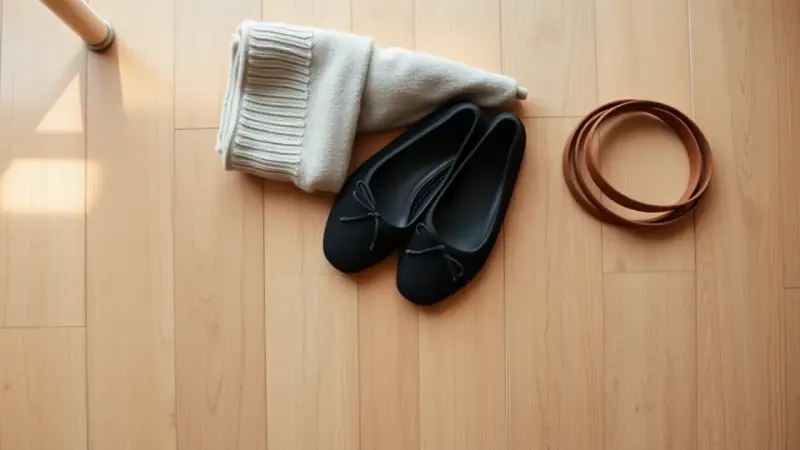
A ballet flat is a slip-on shoe with almost no heel and a low-cut upper. It is modeled on the soft slipper dancers wear, with a hard sole added so it can be worn on the street. Many have a small drawstring or bow at the front of the opening. Some swap that for an elastic topline or an instep strap.
The style has no laces, buckles or real heel to hold the foot in place. Fit and construction therefore matter more here than with almost any other shoe.
Origins: Court Slippers, Capezio and Repetto
In the 16th century, European courtiers wore slippers called pompes, which looked a lot like today’s ballet flats. In dance, heelless ballet shoes arrived in the 18th century, and the ballerina Marie Camargo was the first woman to wear them.
The American line of the story starts with Salvatore Capezio. He began repairing shoes for performers in the United States in the 1880s, including dancers’ pointe shoes. In 1910, the Russian ballerina Anna Pavlova had him make pointe shoes for her entire company during a visit to New York.
The fashion designer Claire McCardell moved the shoe off the stage. She asked Capezio for ballet-style flats with rubber soles in fabrics that matched her clothes. She showed the shoes from that collaboration in her 1941 collection.
In Paris, Rose Repetto, a shoe designer born in Milan in 1907, started making ballet shoes in 1947. Her son, the future dancer and choreographer Roland Petit, kept coming home from class with sore feet. In 1956, Brigitte Bardot, who had trained in classical ballet, asked Repetto for a comfortable street version of the slipper to wear in the Roger Vadim film “And God Created Woman.” The result was a red flat named the Cendrillon. Bardot also wore ballet flats on the red carpet at Cannes, which spread the style further. Audrey Hepburn later paired ballet flats with cigarette pants in Funny Face.
The shoe also changed how shoes were made. Repetto introduced a “stitch and return” method in the 1940s. Salvatore Ferragamo patented a shell-shaped sole in 1957; the sole curves up around the heel and becomes part of the upper.
Anatomy: The Parts That Define It
- Vamp: The front of the upper, covering the toes and forefoot. On a ballet flat it is short and cut low. A deeper vamp holds a high instep better.
- Topline: The edge of the shoe’s opening. It may be bound with a drawstring, a bow or elastic. A low topline shows more of the foot but grips the heel less.
- Toe box: The space around the toes. It can be round, almond-shaped or pointed. Your toes should not touch the end.
- Heel counter: The stiffener at the back of the shoe. A firm counter grips the heel. A weak one lets the heel lift out as you walk.
- Last: The foot-shaped form the shoe is built on. It sets the length, width and volume, and it decides whether the heel sits snugly.
- Outsole: The bottom of the shoe. Capezio’s hard sole is what turned a studio slipper into a street shoe.
How to Wear It: Three Formulas
- Office: Slim cropped trousers, a fine-knit sweater and black leather flats. This is the cigarette-pant look Hepburn made famous, and the cropped hem shows off the low vamp.
- Weekend: Straight-leg jeans rolled to the ankle, a striped long-sleeve tee and a trench coat. Round-toe flats in a neutral leather keep the outfit easy.
- Evening: A midi slip skirt or simple dress with a cardigan or blazer. Pointed flats in satin or patent leather work in place of heels.
Fit and Sizing Notes
Look for a snug fit that does not pinch. Your toes should not hit the front, the ball of your foot should not feel pressure, and your heel should not come out of the shoe with each step. To test this, walk on a hard floor. If your heel lifts more than a few millimeters, try a half size smaller or a style with a strap.
Half sizes help when the smaller whole size is tight at the toes but the next size up slips at the heel. A gap behind the heel as wide as your thumb means the shoe is a half size too long. Ballet flats in French sizing tend to run small and narrow, so many people with regular-width feet go up half a size.
Sizing up for wide feet has a catch. The extra half size adds room across the ball of the foot, but it also adds length, and that extra length lets the heel slip. Size up only when the heel counter is stiff enough to hold the foot. A high instep can make a low-vamp flat slip in every size. In that case, buy your true size and add a full-length insole.
Leather and suede flats loosen in width as you wear them. Break a new pair in gradually at home before you wear them for a full day.
The Buyer’s Eye: Signs of a Well-Made Pair
- A firm heel counter: Press the back of the shoe. It should hold its shape and grip the heel, not fold flat.
- A vamp that suits your foot: A vamp cut too short for your instep will slip however good the leather is.
- A secure topline: Binding, a drawstring or elastic should follow the edge of the opening evenly, with no gaps or loose ends.
- Lining: Look closely at the lining material as well as the fit note for the specific model. The lining touches the bare foot in a shoe often worn without socks.
- Sole attachment: Look for a sole that is fixed cleanly all the way around the edge, whether it is stitched or a molded shell. Bend the shoe and check that the edge does not lift.
- Upper material: Leather and suede uppers adapt to the foot over time.
FAQ
– Who invented the ballet flat?
No single maker invented it. In the United States, Claire McCardell had Salvatore Capezio make street versions, which she showed in 1941. In France, Rose Repetto began making them in 1947 and created the Cendrillon for Brigitte Bardot in 1956.
– Should I size up in ballet flats?
Only in some cases. Narrow French-sized flats often call for half a size up. But a longer shoe can slip at the heel, so do the walking test, and consider a strap or an insole instead.
– Will leather ballet flats stretch?
Leather and suede give in width as you wear them. Buy a pair that fits in length from the start, then break it in slowly at home.
Sources
- Shoe models – Ballet flats – Micam Mag — mag.micam.it
- Fashion Archives: The History of the Ballet Flat — startupfashion.com
- Ballet Flats for Wide Feet: Sizing Without Heel Gape — oscarblackwood.com