
The Short Answer: What Makes a Shoe an Espadrille
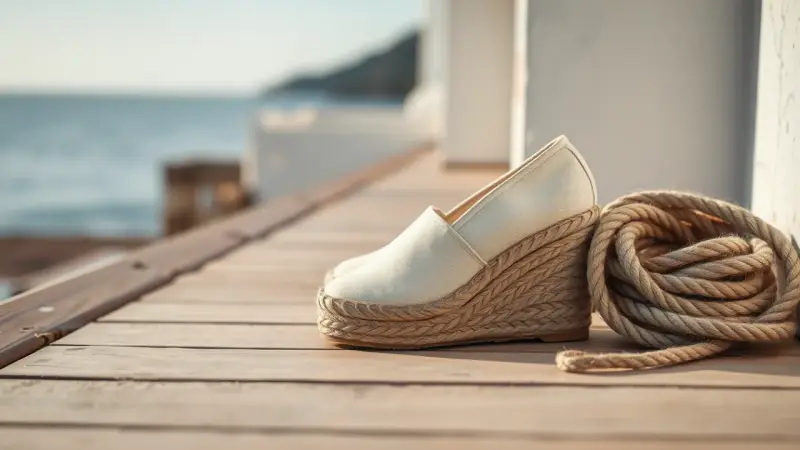
The rope sole defines an espadrille. The classic version pairs a canvas or cotton fabric upper with a flexible sole made of esparto rope, and that sole is the defining feature no matter what the upper looks like. Today the braid is usually jute, and the soles can be esparto, hemp or jute.
The silhouette varies a lot. Soles can be flat, platform or wedge-shaped, and when the upper opens into straps, the shoe becomes an espadrille sandal. Because they slip on without laces, espadrilles are still considered a very casual style.
Origins: From the Pyrenees to the Paris Runway
The espadrille has been worn since the 13th or 14th century. Its roots lie in the Occitania and Catalonia areas of the Pyrenees, along the Spanish-French border. The name comes from esparto, the Mediterranean grass traditionally used to make the braided soles. The shoe is called espardenya in Catalan and alpargata in Spanish, and in the Basque region it is called espartina.
For most of its history it was a work shoe. Soldiers, peasants and anyone who needed cheap, practical footwear wore it. It was worn by the King of Aragon’s infantry, by mine workers and by priests, and it also became the standard shoe for the Sardana, the Catalan national dance.
The maker most closely tied to its move into fashion is Castañer. The company opened its first workshop in Banyoles in 1927. During the Spanish Civil War (1936–39), the government took over the factory to make shoes for soldiers.
The turning point came in 1970. At a trade fair in Paris that year, Yves Saint Laurent met Castañer after spending months looking for someone who could make him a wedge espadrille. Castañer’s own chronology credits that partnership with creating the first wedge espadrille, and the style was an instant hit.
Anatomy: The Parts That Define It
| Part | What it is | What to look for |
|---|---|---|
| Upper and vamp | On traditional pairs, the toe and vamp are cut as one piece of canvas and seamed to the rope sole along the sides. | Dense canvas that holds its shape when you pull it gently. |
| Rope sole | The braided jute or esparto base, and the shoe’s main structural element. | A tight, even braid that feels dense rather than crunchy. |
| Rubber outsole | Jute soles usually have fully or partially vulcanized (hardened) rubber underneath so they last longer. | Rubber that is bonded into the jute, not a loose layer. |
| Wedge | A raised, stacked rope heel. It is usually no more than an inch or two high, often with a thin rubber layer underneath for grip. | A clean, firm joint where the upper meets the sole. |
| Heel counter and lining | The back of the shoe and its inside layer. | A reinforced heel counter and a thin canvas lining. |
How to Wear It: Three Outfit Formulas
Espadrilles are made for warm weather: beach towns, outdoor dining, vacations and weekend errands. The jute sole and fabric upper always look casual, so no espadrille works with formal trousers or suits.
- Weekend by the water: flat canvas espadrilles with swim shorts or chinos and a plain cotton shirt.
- Lunch outdoors: flat espadrilles with linen trousers, a midi skirt or a casual dress, which keeps the outfit from looking heavy.
- Summer evening or a casual celebration: a wedge espadrille with a midi skirt or a simple dress. The wedge gives you height but looks less formal than a traditional heel. On the men’s side, a flat pair also works with casual tailoring.
Fit and Sizing Notes
Espadrilles should feel snug when you first try them on. That can feel odd in the store, but the shoes stretch slightly with wear. A pair that starts out loose can slip at the heel after a few wears.
- Width: Canvas pairs stretch a little across the width after a few wears. Don’t count on a full size of give.
- Half sizes: The jute does not stretch, so buy your exact size, or go up half a size if your feet are wide or you prefer a roomier fit.
- Timing: try them on late in the day, when feet have swollen. A tiny bit of heel movement is fine, but a lot of slipping causes blisters.
- Ties: On ankle-tie styles, tighten the ankle first so your foot doesn’t slide forward onto the ties.
- Material: suede and canvas versions can size differently, so check the size advice for each.
Care Routine by Material
Canvas uppers
Once the canvas is dry, brush or wipe off dust after each wear. For dirt, use a microfiber cloth with warm water and a neutral soap. For stains, use a soft brush with a paste of baking soda and water. A fabric protector spray helps, and you should reapply it after each cleaning. Never put espadrilles in the washing machine.
Jute soles
Moisture is the main threat. If the jute stays wet, the fibers weaken, and the sole can separate or unravel if it dries out of shape. Keep the soles away from rain and puddles, and clean them gently with very little water. If they get damp, let them air dry at room temperature, without soaking the jute or using direct heat. Salt water and chlorine can discolor them.
Wedges and storage
On wedge and platform pairs, pay special attention to the seam where the sole meets the upper. After each wear, shake out sand and let the inside air out. Store them in a cool, dry place out of direct sunlight.
The Buyer’s Eye: Marks of a Well-Made Pair
- Stitched attachment: on traditional pairs, the sole is stitched to the upper, not just glued, and the stitching shows around the sole’s edge.
- Even hand stitching: small, consistent stitches holding the upper to the sole, with no glue blobs and no frayed threads.
- Dense braid: a loose or thin jute sole unravels and pulls away from the upper sooner, especially at the toe and heel, where the shoe flexes most.
- Bonded rubber: rubber worked into the jute holds up better than a flat rubber sole glued onto the bottom.
- Firm canvas: good fabric resists stretching when you pull it gently between your fingers, while cheap canvas stretches and distorts.
FAQ
– Who created the wedge espadrille?
Castañer’s official timeline credits a 1970 collaboration with Yves Saint Laurent. The two met at a Paris trade fair after the designer had spent months looking for a maker.
– Do espadrilles stretch?
Yes, but only the upper, and only slightly. Canvas loosens a little across the width, but the jute sole does not, so start snug and don’t expect a full size of give.
Sources
- Espadrille — en.wikipedia.org
- Castañer Heritage – 90 Years Creating Alpargatas Junto a Ti — castaner.com
- Unraveling the Quiet Luxury of Well-Made Espadrilles – deemvibes.com — deemvibes.com