
The Short Answer
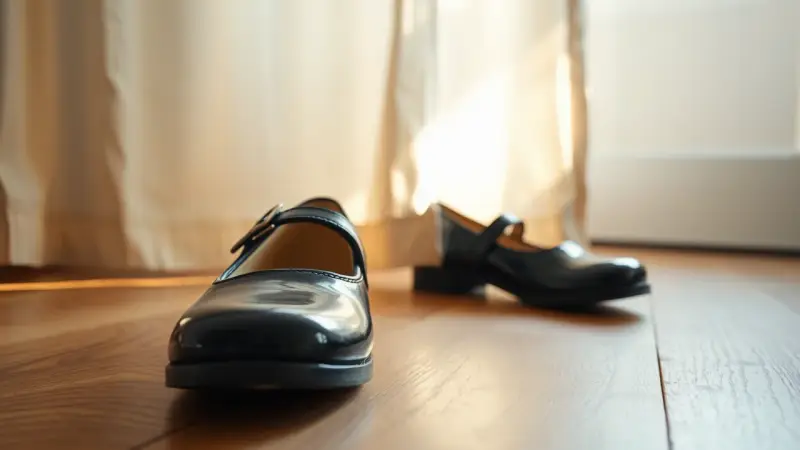
A Mary Jane is a closed, low-cut shoe with one or more straps across the instep. It also goes by the names bar shoe, strap shoe and doll shoe. The classic version has flat soles or low heels and rounded toes, and the strap fastens with a buckle or a button.
The strap is the whole difference between a Mary Jane and its closest relative. A ballet flat has no strap and stays on by the fit of its topline, while a Mary Jane has a strap across the instep that holds the heel in place.
Origins: From the Funny Pages to the Shoe Store
The shoe is older than its name. In the 19th century, this style was often seen on young children, boys in particular. The name came from newspaper comics. On 4 May 1902, cartoonist Richard F. Outcault debuted *Buster Brown* in the *New York Herald*. The strip’s cast included Buster’s sweetheart, Mary Jane, a character Outcault based on his own daughter, who shared the name.
The shoe connection was made at the 1904 St. Louis World’s Fair. There, Outcault licensed his Buster Brown characters to around 200 companies, the Brown Shoe Company among them. John Bush, a Brown Shoe sales executive, persuaded his company to purchase rights to the Buster Brown name. The company also bought licensing rights for “Mary Jane” for their line of girls’ strap shoes. Both characters wore the strapped style in the strip, but the shoe took her name. The Brown Shoe Company later renamed itself Caleres.
The Mary Jane soon grew up. Mary Janes with heels started becoming particularly popular for women in the 19-teens and 1920’s, when they were also called strap pumps and were worn for dancing. Boys still wore the style as part of formal dress until around 1930’s. From that decade on, it came to be seen as a girls’ shoe.
Anatomy: The Parts That Define It
- Instep strap: the defining feature. A true Mary Jane has at least one strap running across the top of the foot, buckling to the outer edge. Variations include double straps and T-straps.
- Closure: a buckle, a button or hook-and-loop. A buckle gives a more finished look. Hook-and-loop lets the wearer loosen or tighten the strap as the foot swells over the day.
- Vamp: the upper part of the shoe that covers the front and top of the foot. Its edge decides where the shoe presses.
- Toe: round on the classic pair. Square and pointed toes appear on modern versions.
- Sole and heel: thin, flat soles on the traditional pair. Today’s range runs from low block heels to platforms.
- Last: the shape the shoe is built around. If the heel slips, a different last is a better fix than a tighter strap.
How to Wear It: Three Formulas
Weekday casual: flat black Mary Janes, straight or high-waisted jeans, a plain tee or crewneck sweater. A slim strap and a round toe keep the look simple.
Office: low block-heel Mary Janes in leather, tailored trousers that end at the ankle so the strap shows, and a knit or button-down shirt.
Evening or event: a heeled Mary Jane or T-strap with a skirt or dress and dark tights. This formula comes straight from the strap pumps that women danced in during the 1920s. For a Gothic look, the plain buckle shoe works with dark layered pieces.
Fit and Sizing Notes
A strap is not a sizing tool. It can only refine a shape that already fits. Before the closure does anything, the shoe needs enough forefoot width, upper depth and strap length.
- Shop late in the day, when feet are largest, and fit the shoe to your larger foot.
- Fasten the strap so it holds firmly without pressing on the instep. Then walk, check that the heel stays down, and make sure the toes can spread.
- One finger should slide under the fastened strap. Two fingers means it is too loose.
- The strap should close without pulling the sides of the shoe inward. If the forefoot only feels tolerable when the strap barely closes, the underlying shape is likely wrong.
- For a high instep, a longer strap helps. For wide feet, the widest part of the foot should sit within the platform, not over its edge.
- With bunions, choose a vamp whose edge crosses the foot above or below the bunion.
- If the heel slips even with the strap tight, a double-strap Mary Jane holds the foot at two points.
The Buyer’s Eye: Marks of a Well-Made Pair
Start with the strap. It takes all the strain, so check where it joins the upper and how the closure is set. A buckle strap with metal eyelets, such as brass, holds up better than holes simply punched in the leather. The buckle should sit on the outer side of each foot.
Next, check the upper and sole together. A soft leather upper, a flexible sole, and an adjustable strap make for a more comfortable shoe than a slip-on, because the strap holds the foot without needing a perfect fit. Look inside for built-in arch support, or for a removable insole that leaves room for your own orthotic.
Last, compare construction. Mary Janes now come in many heel heights, constructions and materials, from patent leather to felt. Pick the build and material that suit how often, and where, you will wear the pair.
FAQ
– Why is the shoe called a Mary Jane?
It is named after Mary Jane, Buster Brown’s sweetheart in Richard F. Outcault’s comic strip, which began in 1902. After the 1904 World’s Fair, the Brown Shoe Company licensed the name for its girls’ strap shoes, and shoppers began asking for the style by her name.
– Were Mary Janes always a women’s shoe?
No. In the 19th century the style was common on young children, especially boys, and boys still wore it with formal clothes until around the 1930s.
Sources
- Why Are They Called Mary Jane Shoes? — charliestoneshoes.com
- The History of Mary Jane Shoes — blog.americanduchess.com
- Mary Jane Shoes for Bunions and Wide Feet — thefitville.com