
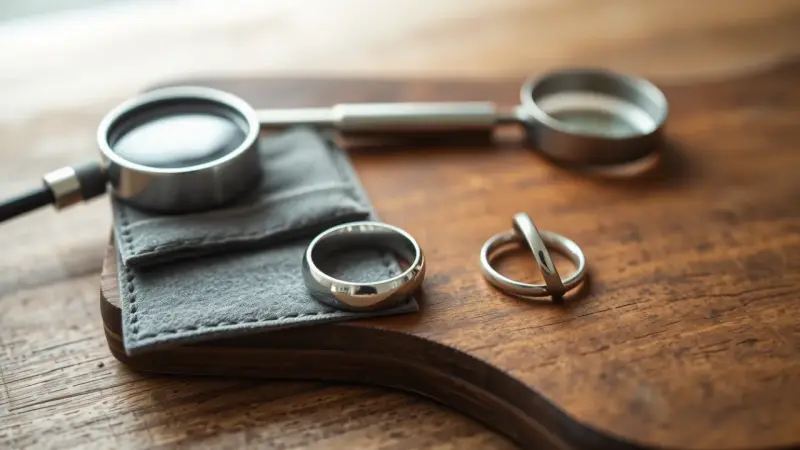
The number 925 on jewelry means the piece is sterling silver: 92.5% pure silver by weight and 7.5% other metals, usually copper. A 925 stamp shows the metal is solid silver all the way through, not a plated base metal. The stamp is only as trustworthy as the seller, so buy from reputable sources.
Variations such as S925, .925, STER and Sterling all mean the same thing. Gold-colored jewelry stamped 925 is a little different. It is gold over silver, not solid gold.
What does 925 mean on jewelry?
The 925 stamp is a purity mark, also called a quality mark. It tells you how many parts per 1,000 of the metal are pure silver. In this case, 925 of every 1,000 parts are silver. The other 75 parts are an added alloy, most often copper. Some makers use zinc or other metals instead.
Makers add those other metals because pure silver is too soft for rings, chains and clasps that get worn every day. The added metal makes sterling hard enough to hold a shape and keep stones in place, while it still looks and feels like silver.
In the United States, the Federal Trade Commission’s jewelry guides say an item can be called “sterling silver” only if it contains at least 92.5% silver. Federal stamping law also expects a quality mark like 925 to appear with the maker’s registered trademark. That is why you often see a small logo or initials next to the number.
925 vs. S925, Sterling, .925 and other jewelry stamps
The stamps 925, S925, .925, STER and Sterling all mean the same alloy: 92.5% silver. The “S” in S925 simply stands for sterling. That version shows up often on jewelry made in Asia. A piece marked “Sterling” with no number is not lower quality. Word marks were common on older American pieces, and number marks spread as jewelry trade became more international. “925 Italy” means sterling silver made in Italy.
Other numbers follow the same parts-per-1,000 logic. The table below lists the ones you’ll most often see on a bracelet, necklace or ring.
| Stamp | Metal | Pure metal content (%) |
|---|---|---|
| 925, S925, .925, STER, Sterling | Sterling silver | 92.5 |
| 999, .999, Fine Silver | Fine silver | 99.9 |
| 958 | Britannia silver | 95.8 |
| 900, Coin | Coin silver | 90.0 |
| 800 | 800 silver (common on older European pieces) | 80.0 |
| 750, 18K | 18-karat gold | 75.0 |
| 585, 14K | 14-karat gold | 58.5 |
| 417, 10K | 10-karat gold | 41.7 |
| 950, PT950, PLAT | Platinum | 95.0 |
Watch for plating marks too. Stamps like EP, EPNS, SP or “silver plated” mean only a thin layer of silver over another metal. These are not sterling.
What does 925 mean on gold-colored jewelry?
A 925 stamp on gold-colored jewelry means the base metal is sterling silver with a gold layer on top. The piece is not solid gold. Solid gold carries a karat or gold-purity mark such as 14K, 585, 18K or 750.
The gold layer falls into one of two categories:
- Gold vermeil. Under FTC guidance, vermeil is sterling silver coated with gold of at least 10 karats and at least 2.5 microns thick. Some pieces are marked “925 vermeil.”
- Gold-plated sterling. This is a thinner gold coating over sterling. It can wear through over time and show the silver underneath.
Either option costs less than solid gold, and the silver underneath has value of its own. Expect to have the piece replated eventually if you wear it often.
Is 925 jewelry good quality?
Yes, 925 sterling silver is good-quality jewelry metal. It is solid precious metal, it can be repaired and resized, and it can last for generations with basic care. There are a few trade-offs to know about:
- It tarnishes. Sterling darkens when it reacts with sulfur in the air, in some foods and on skin. Tarnish is surface discoloration, not damage, and it polishes off.
- It scratches more easily than gold or platinum. Sterling rings and bracelets show wear faster, though the scratches can be buffed out.
- Alloys can matter for sensitive skin. Copper-based sterling is fine for many people. If you react to nickel, look for pieces labeled nickel-free.
- Some pieces are rhodium-plated. A rhodium coating adds a brighter white shine and slows tarnish, but it can wear off with time.
How to tell if a 925 stamp is real
A 925 stamp is easy to fake, so treat it as a claim rather than proof. These checks help:
- Look for the maker’s mark. On American and many imported pieces, a real quality mark usually sits beside a brand logo or initials. A lone, crooked “925” on a cheap chain is a warning sign.
- Try a magnet. Silver is not magnetic. If a strong magnet pulls hard on the piece, it is not solid sterling. Clasps and springs can contain steel, so test the body of the piece.
- Rub it with a white cloth. Sterling often leaves a dark smudge as tarnish comes off. This sign points toward silver but does not prove it.
- Check worn spots. If a different-colored metal shows through at the edges or on the clasp, the piece is plated.
- Ask a jeweler. A jeweler can run an acid test or an X-ray fluorescence (XRF) scan. XRF is a quick, non-damaging test that reads the metal’s makeup.
Is 925 jewelry worth anything?
Yes, 925 jewelry is worth something, because it contains real silver. A piece’s scrap or melt value depends on two things: its weight and the current spot price of silver, which changes every trading day.
Here is how to estimate melt value:
- Weigh the piece in grams. Remove or subtract any stones.
- Multiply by 0.925. This gives you the weight of the pure silver.
- Convert to troy ounces. Divide by 31.1, the number of grams in one troy ounce.
- Multiply by the spot price. Use the day’s spot price for silver per troy ounce.
Worked example: a 20-gram sterling bracelet holds 18.5 grams of pure silver (20 × 0.925). That works out to about 0.59 troy ounces. Multiply 0.59 by that day’s spot price to get the melt value.
Dealers and pawnshops pay less than full melt value so they can make a profit. Signed designer, antique or handcrafted pieces can sell above melt value to collectors, so get those appraised before you scrap them.
How to care for 925 sterling silver
The easiest way to keep 925 sterling silver bright is to wear it, wipe it with a silver polishing cloth, and store it dry. For a deeper clean, follow these steps:
- Wash it gently. Use warm water and a drop of mild dish soap.
- Clean the crevices. Use a soft toothbrush on chains and engraving.
- Rinse and dry completely. Moisture speeds up tarnish.
- Polish lightly. Finish with a polishing cloth, but skip the cloth on plated or vermeil pieces so you don’t rub off the coating.
Take sterling off before swimming in chlorinated pools, using bleach or cleaning products, or applying lotion and perfume. Store each piece in an airtight bag or an anti-tarnish pouch. For antique pieces, pieces with blackened (oxidized) designs, or anything set with porous stones like pearls or opals, have a jeweler clean it.
FAQ
– How much is 1 gram of 925 silver worth?
One gram of 925 silver holds 0.925 gram of pure silver. To find its melt value, divide the day’s spot price per troy ounce by 31.1, then multiply by 0.925. Spot prices move daily, so check a current quote before you sell.
– Is 925 pawnable?
Yes, 925 sterling silver is pawnable, and pawnshops generally value it by weight. Offers are usually below melt value, so know your piece’s weight and the day’s spot price before you go. Designer or antique sterling may get a better offer from a specialist buyer.
– Can 925 silver turn your skin green?
Yes, 925 sterling silver can occasionally leave a green or dark mark on skin. This happens when the copper in the alloy reacts with sweat, lotion or moisture. It is harmless and washes off, and keeping the jewelry clean and dry helps prevent it.
– Can you wear 925 silver in the shower?
You can wear 925 sterling silver in the shower without ruining it, but doing so often speeds up tarnish. Soap residue can also dull the shine. Remove it for swimming pools and hot tubs, since chlorine is harsher on silver than plain water.